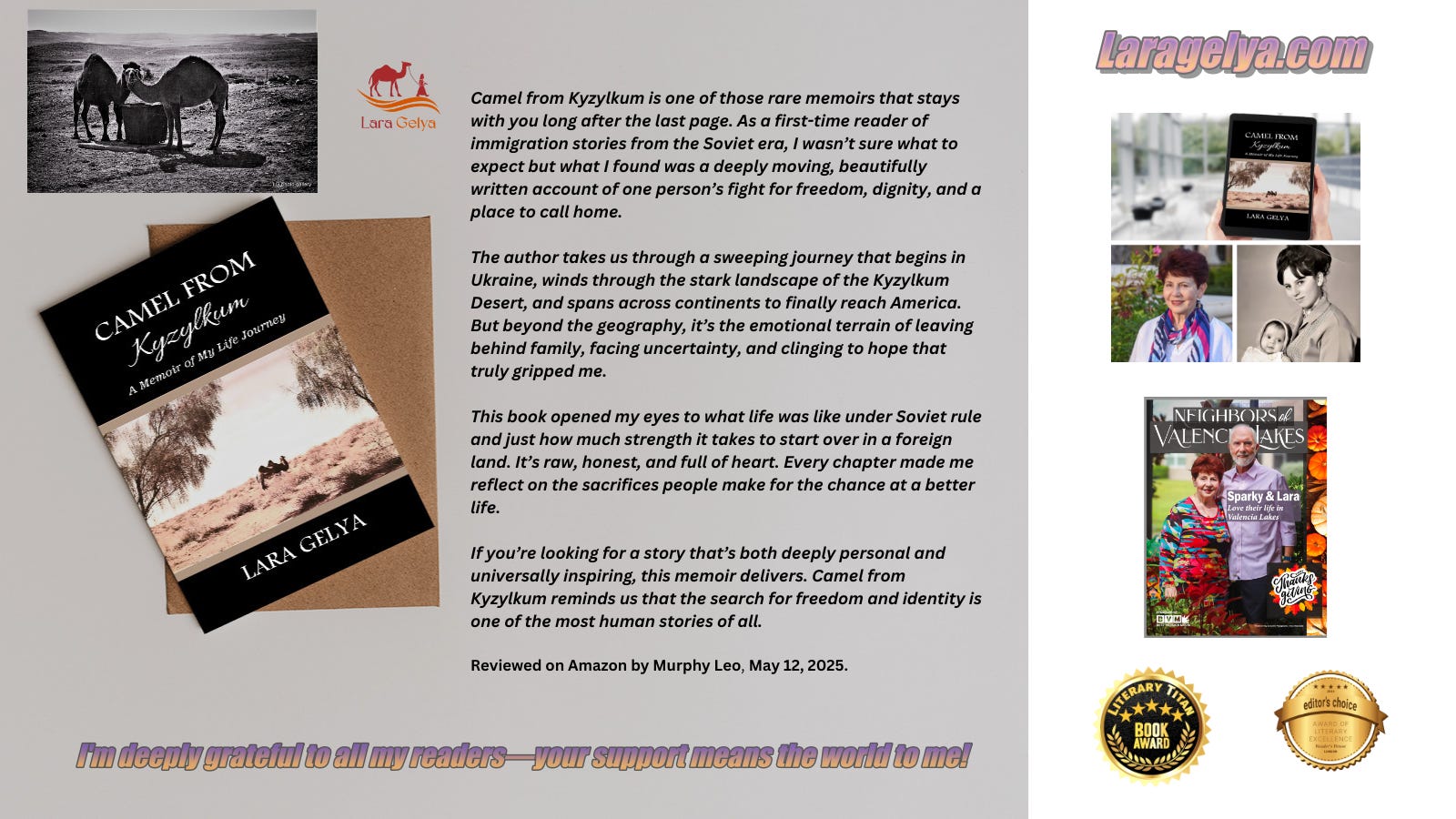
Refugee Journey
Camel from Kyzylkum - A Memoir of My Life Journey

No other nation has an immigrant population as large as that of the United States. With the important exception of those descended from Native peoples and enslaved Africans, nearly everyone in this country can trace at least part of their ancestry to immigrants—whether they arrived recently or generations ago.
As of May 2025, the United States is undergoing significant shifts in its immigration and refugee policies under the current administration. These changes have profound implications for migrants, refugees, and the broader American society.
Communities with significant immigrant populations are experiencing heightened fears and uncertainties. Advocacy groups warn of potential humanitarian crises, family separations, and economic disruptions resulting from these policy changes.
I am deeply appalled by how the current administration has undermined American values and enforced cruel, inhumane policies.
Thirty-five years ago, I arrived in this country as a refugee, carrying little more than hope and the memories of a life left behind.
During the quiet and uncertain days of the COVID-19 pandemic, I found myself looking back—reflecting on the path that brought me here. That reflection became Camel from Kyzylkum, a memoir of my journey through loss, resilience, and the search for belonging.
Camel from Kyzylkum - A Memoir of My Life Journey.
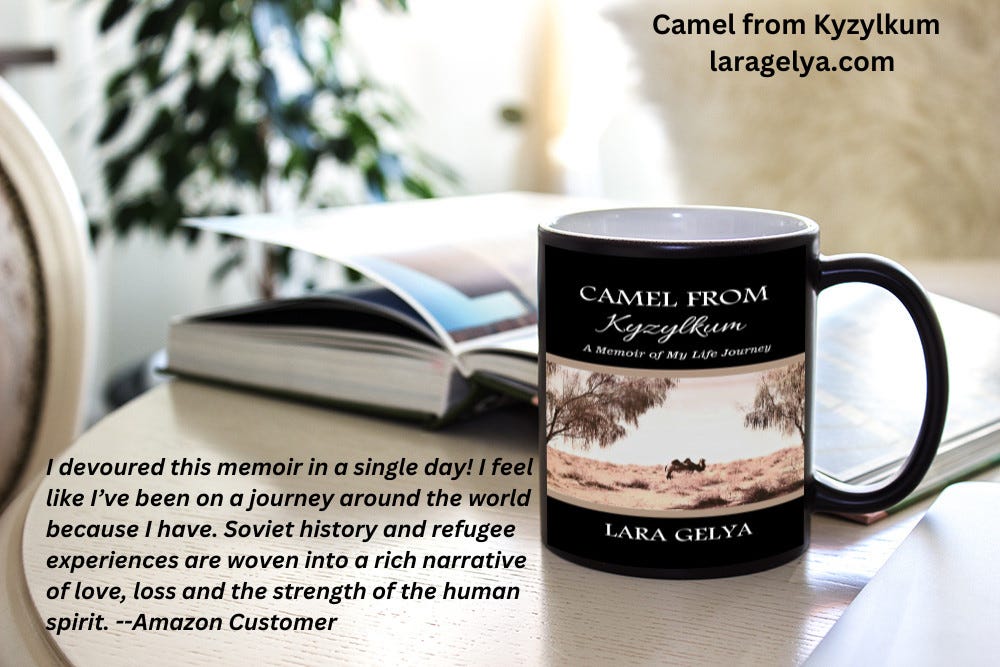
In my memoir I share journey from the Soviet Ukraine through the deserts of Uzbekistan, refugee camps in Austria and Italy, and ultimately to a new life in the United States.
My journey was not only geographical but deeply emotional.
Camel from Kyzylkum is not only a personal story—it’s also a window into a rarely told chapter of 20th-century history. The book reflects on growing up under the Soviet regime, the hardships of displacement, and the emotional toll of leaving one’s homeland behind.
Yet, at its heart, this is a story of hope: the strength it takes to start over, the memories we carry with us, and the identity we shape along the way.
It offers my readers a window into a disappearing world and the enduring strength of the human spirit.
The “camel” in the title serves as a powerful metaphor for endurance and resilience—qualities that define both the author’s life and the lives of so many who have journeyed through uncertainty in search of freedom and belonging.
My memoir also speaks to themes universal to immigrant experiences: the loss of homeland, the preservation of memory, the importance of language and culture, and the difficulty of starting anew.
Yet, what sets Camel from Kyzylkum apart is its unique perspective—from someone who not only witnessed the final years leading up to the collapse of the Soviet Union, but also lived through the rarely told experience of being a Jewish refugee within that system.
My story is not only personally meaningful—it holds historical significance. It resonates across cultures and generations.
Camel from Kyzylkum is a testament to courage, identity, and the quiet strength of those who endure the refugee journey and discover meaning along the way.
Whether you're drawn to memoirs, immigrant stories, or historical journeys through the Soviet era, this book will inspire, educate, and stay with you long after the final page.
With heartfelt gratitude to everyone who takes the time to read and connect—I'm truly thankful!
📘 Read it now:
📦 Amazon: https://amazon.com/dp/B09Y7GTZQS/
📚 Barnes & Noble: https://rb.gy/lz7rzg
🎧 Audiobook: https://tinyurl.com/yfnzp8nr